Cash Gab with Noah - June 2026
Noah Ross - Jun 01, 2026
In this issue, we’ll be covering investment concentration risk, buying a home in the GTA, along with some relevant current events.
Quick Nugget of the Day
Concentration Risk Takes Different Forms
Concentration risk, put simply, is having too many of your eggs in too few baskets. If one basket breaks, you lose a meaningful portion of your eggs.
For many investors, owning an index like the S&P 500 has been a way to diversify by holding 500 of the largest companies in the U.S. However, over the last several years, something important has changed.
The top 10 companies in the S&P 500 have significantly outperformed the other 490 companies and now represent close to 40% of the index. This means that while the index appears diversified on the surface, a large portion of your portfolio is driven by a small group of companies, many of which are concentrated in technology and tied to the same underlying theme, AI.
Charts on the Weight and Valuations of the S&P 500 Index
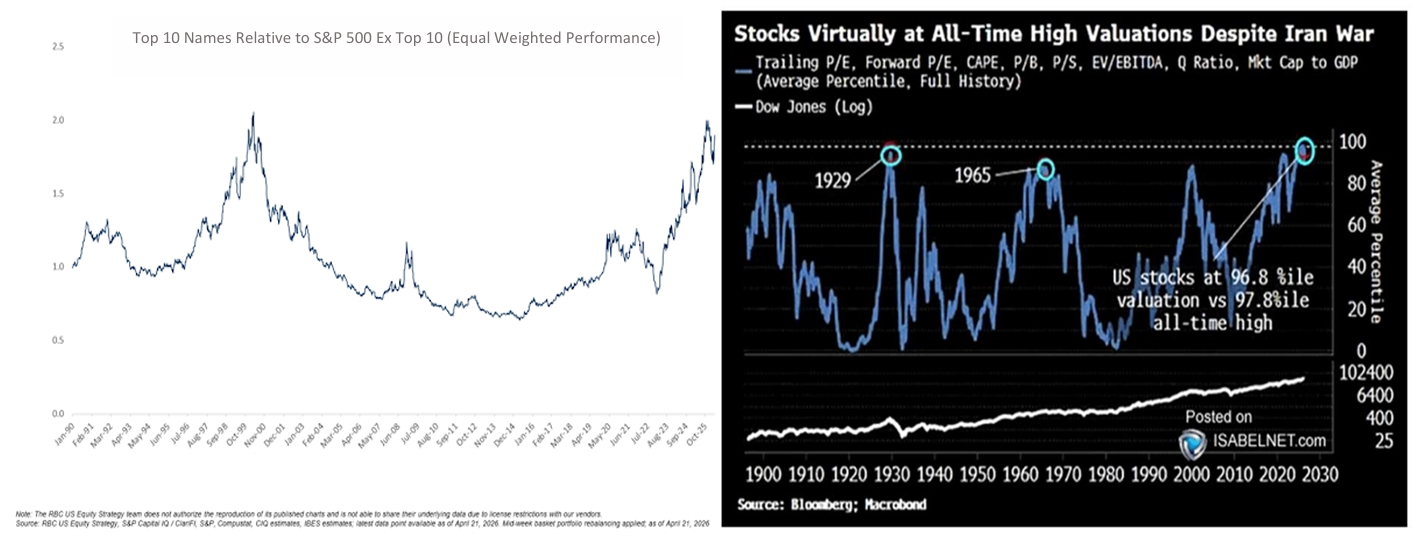
The first chart shows how much the top ten names in the S&P 500 have outperformed the rest of the index. The second chart illustrates how US stocks are at nearly all-time high valuations despite the Iran War.
Putting This Into Perspective
I cannot predict the future and will not try to.
It’s important to remember that despite events like the dot-com bust, the global financial crisis, COVID, and multiple geopolitical shocks, the S&P 500 has still quadrupled in the last 25 years. The long-term investor has been rewarded for staying the course in that index.
However, strong long-term returns do not eliminate risks to the individual investor. It’s important to look in the mirror and ask yourself if AI didn’t work out financially the way it’s expected or if the market pulled back 30% plus tomorrow, do you trust yourself to do the right thing? There’s a reason why over the time that the index has quadrupled, most investors have not…
Defining Investment Risk
At the Ross Group Wealth Advisors, we define investment risk as permanent loss of capital that can materialize from four sources:
- Concentration risk – The central focus of this “nugget”, this is overexposure to a small number of companies, sectors, geographies, or investment themes.
- Liquidity risk – Not having money when you need it and needing to withdraw from your investments, locking in losses.
- Emotional risk – Allowing your fears (or greed) get the best of you and disrupting your long-term plan.
- Inflation risk – Money is underinvested, and inflation quietly erodes your purchasing power over time.
Why This Matters
If you are approaching retirement or another major financial milestone, such as purchasing a home, concentration risk is very important.
A significant and lengthy pullback in a concentrated index like the S&P 500 could amplify your liquidity risk if you need to access funds during that period. This will also trigger the emotional risks that exist for all investors.
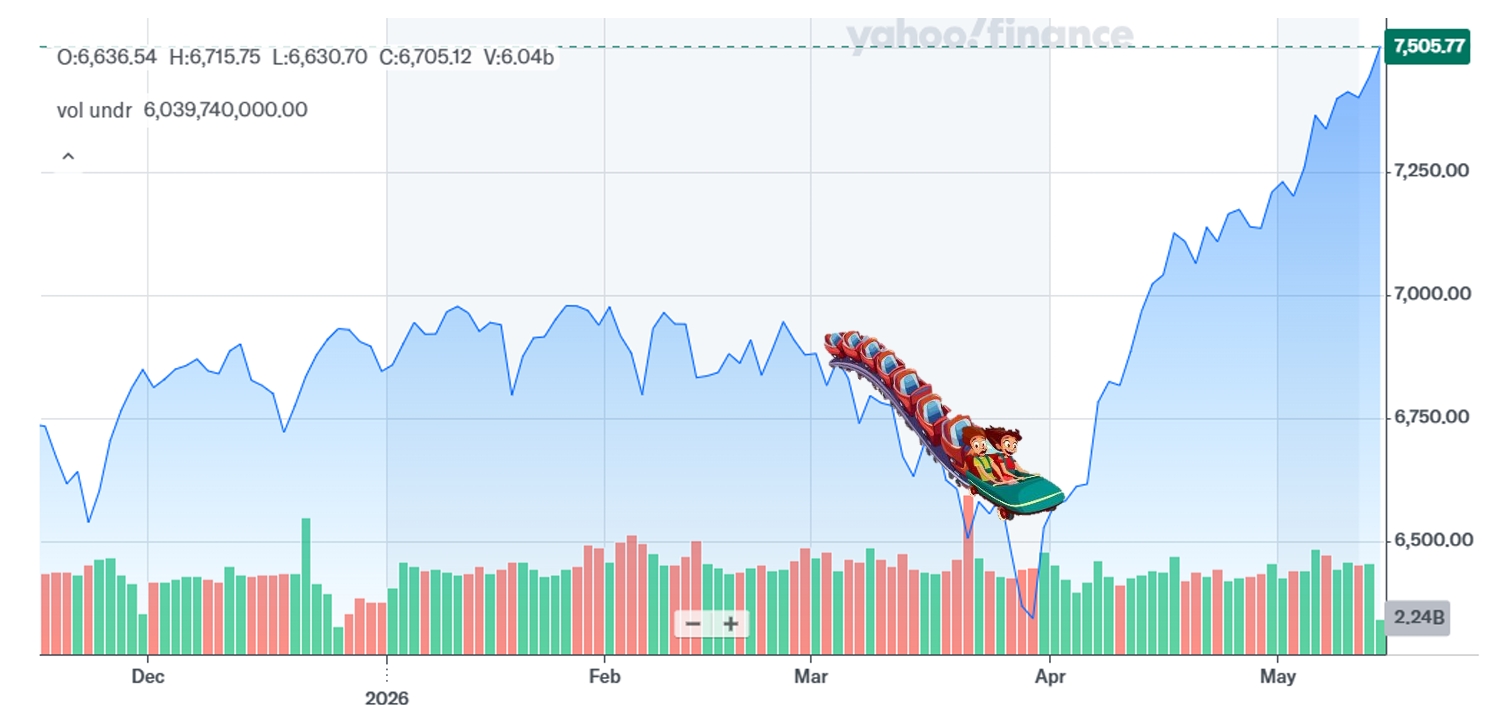
It’s easy to ride the rollercoaster on the way up (like the last few years), but many people abandon the ride because they can’t withstand the full force of the ride on the way down.
Checking In On Canadian Housing
Homes Are Expensive
Homes in Canada are expensive but something in the market has been changing. Home prices in Canada are down around 20% from their peak in Q1 2022. At the same time housing prices are going down, mortgage rates have been going up as per the charts below:
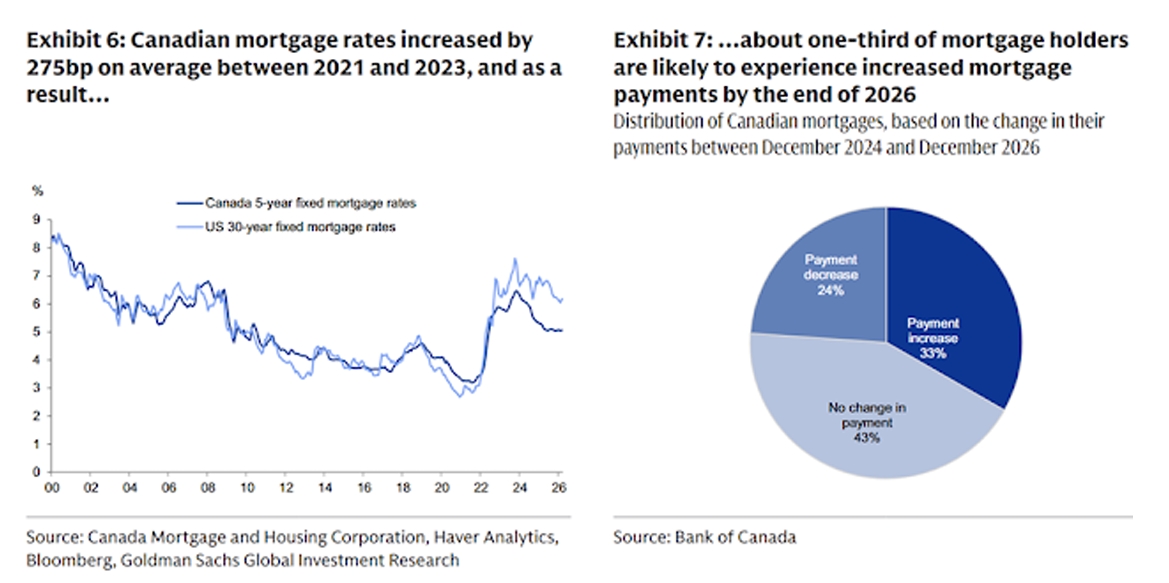
The implication of a third of mortgage holders experiencing increases by the end of the year can be big. How many of those owners will be able to carry their increased mortgage? With inflation happening in many other areas like food and gas, the ability to withstand an increase in mortgage payments could push owners to sell.
Average Costs in the GTA
I used Ratehub.ca to model this scenario.
As of March 2026, the average home price across the GTA (all property types) is just over $1M. With a 20% down payment, that means $200K up front.
This leaves you with an $800K mortgage. Amortized over 25 years at a 5% rate, the monthly payment would be $4,653.
The Non-Mortgage Costs of Homeownership
Owning a home involves more than just the mortgage. Ongoing costs can include:
- Property tax (average is 0.666% of value) - $555/month
- Home insurance - $50/month
- Utilities - $185/month
- Maintenance costs (1%+ of home value annually) - $833/month
Based on these assumptions, non-mortgage costs alone can exceed $1,600 per month. This is a critical part of the equation.
The are also upfront costs beyond the down payment, including:
- Land transfer tax
- Legal fees
- Real estate commissions
- Administrative costs
- Home inspection
Generally, closing costs can be 2-4% of the purchase price. In this example, it’s estimated an additional $27,175 would be needed, before factoring in any repairs, furnishings or upgrades.
What Does This Mean to Prospective Buyers?
The illustration here isn’t meant to discourage homeownership, but to highlight the true cost of owning a home.
One reason we may be seeing more listings at lower prices is the impact of mortgage renewals at higher rates. When rising payments coincide with higher ongoing costs, affordability can quickly become strained. It can also signal that when rates were lower, people may have been buying a little more house than they could truly afford in the long run.
That makes planning essential.
With prices down from the 2022 peak, opportunities may be emerging for first-time buyers. The key is understanding what you can truly afford so you can move forward with confidence.
In the News
‘There’s Mania’: Strategists Weigh in on Looming SpaceX IPO – Yahoo Finance
The article highlights a surge of “IPO mania” driven by AI excitement, with mega‑scale listings like SpaceX potentially reshaping public markets. Unlike past IPOs, SpaceX may allocate an unusually large portion of shares to retail investors, amplifying demand and short‑term pricing dynamics.
At the same time, the S&P 500 is already highly concentrated, with the top 10 companies representing roughly 40% of the index, largely fueled by AI‑driven tech giants. If several high‑valuation AI companies like SpaceX, OpenAI, or Anthropic go public and are quickly added to indexes, they could meaningfully increase that concentration further.
Reflecting on the Lessons the Investment Team has Learned at the 18th Annual Cymbria Day – Cymbria
Cymbria (ticker: CYB) is a long-term, value-focused investment vehicle run by a team of professional portfolio managers, investing in a concentrated portfolio of global public companies alongside select private businesses.
I recently attended their annual investor day, and as always, it was filled with thoughtful insights, commentary on their disciplined approach, and a deep dive into how they make investment decisions.
I’ve linked the recording of their investor day presentation below for anyone interested in learning more about their investment philosophy. Watching this is an hour well spent.
Cash Gab Book of the Month
Book:The Wealthy Barber
Author: David Chilton
Summary: The Wealthy Barber is a Canadian personal finance classic. Through a storytelling approach, it teaches the fundamentals of saving, investing, and building financial security in a clear and accessible way. No financial background is required for it to be impactful, making it a great fit for anyone who prefers learning through stories.
The author, David Chilton, also hosts The Wealthy Barber Podcast, where he speaks with experts across Canada’s financial landscape to explore these topics in greater depth.

The Ross Group: Who We Are

At Ross Group Wealth Advisors, we work with future-minded investors to keep them on track toward greater wealth. Through our unique approach to portfolio management and wealth planning, we deliver smart risk and tax strategies and guide sound decisions that secure their wealth and expand their lives.
What We Provide
We act as your financial quarterback, building comprehensive, long-term strategies, not quick fixes. Our wealth plans aim to minimize taxes and safeguard your financial health today and for the future.
We proactively review your portfolio and overall financial picture, update your wealth plan regularly, and ensure you stay aligned with your goals. We engage with your priorities, uncover opportunities, and challenge assumptions about what you can do and when.
Community Engagement
Join the wait list for an in-person Cash Gab Session:
What is a Cash Gab Session?
Cash Gab brings together peers in similar careers and life stages to share, listen, and learn about financial topics that matter to you. The goal is to build a community of like-minded, future-oriented people aiming to achieve financial freedom.